HATCH

What are you most proud of?

Andrew has built a career solving complex problems for private and ultra-high-net-worth clients around the world. It was demanding, fast-paced and financially rewarding.

Over time, though, what had once felt exhilarating began to feel less meaningful. Then one conversation completely reframed the question he was asking himself.

This is our origin story.

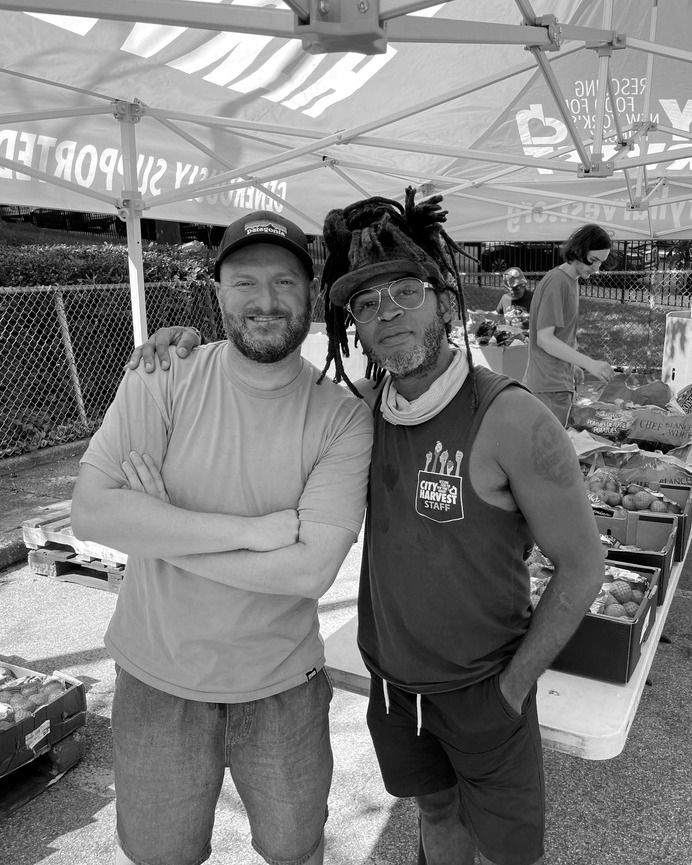
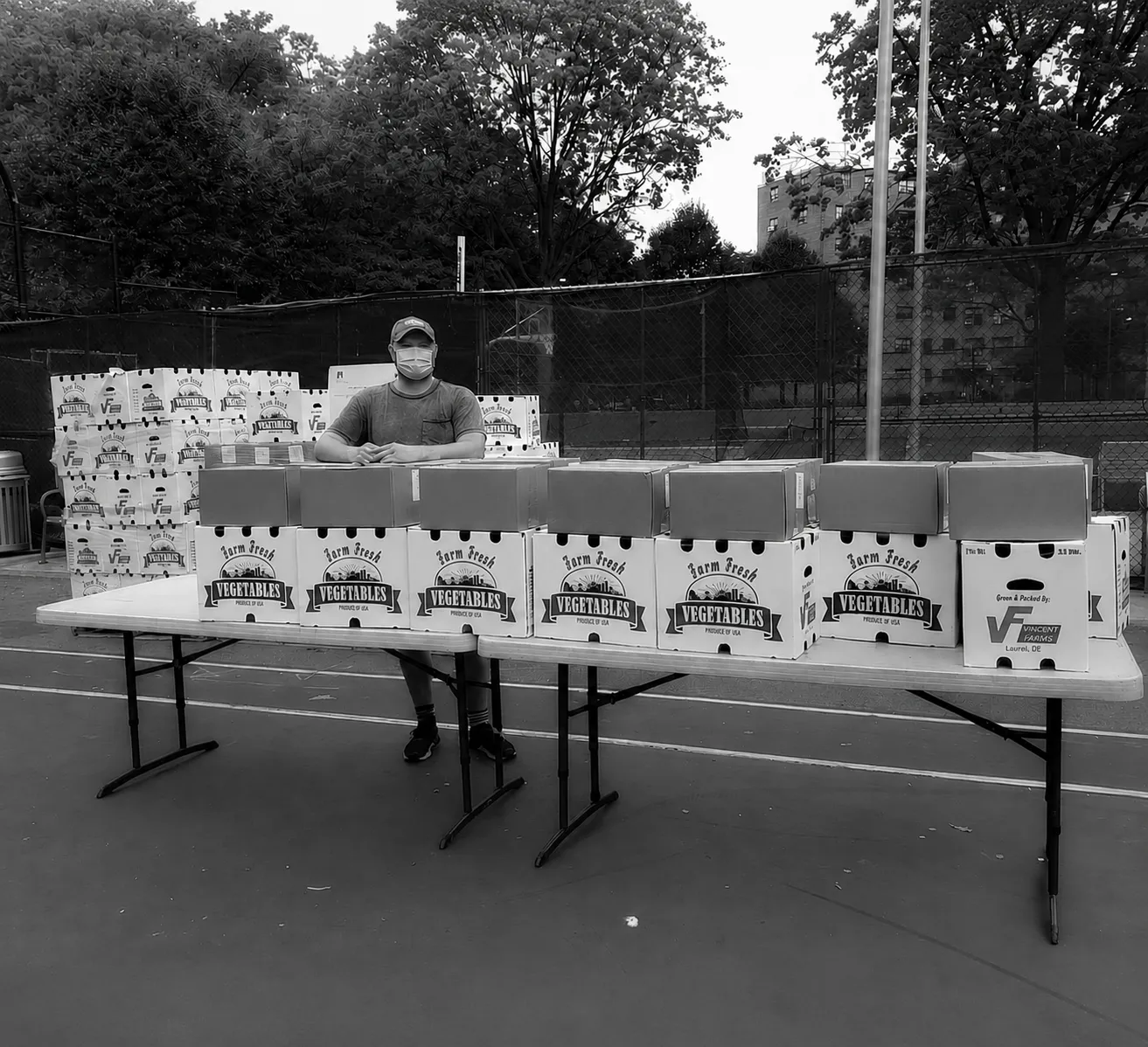
Andrew Gilfillan volunteering at a City Harvest Mobile Market in New York City

Momentum, not just meetings

I have always been happier doing the work than talking about it.

Over more than 20 years, I have worked inside organisations, private offices and leadership teams, helping leaders navigate complexity, manage change and deliver important work. The environments have varied considerably, but I have generally been brought in for the same reason: something needs attention, someone needs to get across it quickly, and the work needs to move.

Meetings have their place, as do plans, reports and presentations. But I have never mistaken any of them for the work itself. I want to understand what is happening, why it matters, what is getting in the way and what needs to happen next. Once that is clear, my instinct is to get on with it.

That means being willing to get into the detail while keeping sight of the wider objective. I like enough structure to keep people aligned and accountable, but not so much that the process starts consuming the work it was designed to support. Good operations should make things easier to deliver, not give people another layer to manage.

I have often been the person asked to step into situations where the path forward was unclear, several people or organisations needed to be brought together, or an important priority did not sit neatly inside anyone’s job description. I enjoy that space because it rewards curiosity, judgement and follow-through more than hierarchy.

Looking back, that preference for action has been one of the constants in my career. Understand the situation, bring the right people together, make sensible decisions and keep things moving. It is straightforward, but it has served me well.

Flying without a net

Early in my career, a manager gave me a piece of advice I have never forgotten: “Don’t come to me with problems. Come to me with solutions.”

It was not an instruction to pretend problems did not exist. It was an expectation that I should think before escalating them: understand what had happened, consider the options and arrive ready to recommend a way forward. I was young, and it quickly became the way I learned to work.

My career subsequently took me across very different markets and operating environments, with time spent in offices and alongside clients across Europe, the Middle East, Asia and the Americas, including London, Dublin, Monaco, Zurich, Malta, Dubai, Singapore, Hong Kong, Melbourne, Panama and Mexico City. New places usually meant new people, new expectations and unfamiliar circumstances.

I began in financial services before moving into international private office environments where discretion, judgement and attention to detail were fundamental. Much of the work involved coordinating advisers, jurisdictions and competing priorities, often on assignments where there was no established playbook and very little room for error.

In my early twenties, I stepped up to coordinate the purchase of a Gulfstream IV private jet for a billionaire former prime minister and businessman living in exile. It was a complex transaction involving a $38 million asset-backed loan, lawyers in five jurisdictions, regulatory notifications and significant urgency. I quickly established myself as the go-to contact for the various parties and the principal. It was around then that I began to realise I thrive in complexity and enjoy finding a way through it.

Those years taught me to become comfortable being uncomfortable. I learned to get across unfamiliar situations quickly, ask questions without pretending to know what I did not know, build trust across cultures and keep moving when the answer was not immediately obvious. Flying without a net became less frightening when I realised that problem-solving was the net.

It started at home

Long before I thought about social impact as a career, public service was simply part of family life.

I grew up on the west coast of Scotland in a small town around half an hour from Glasgow. It was a community that knew its share of social and economic hardship, but it was also a place of strong relationships and a clear sense that people had responsibilities to one another. As a young man, I became involved with Go For It, a local project giving vulnerable young people access to experiences their circumstances might otherwise have put beyond reach.

My dad spent his entire career in social housing, working across emergency rehousing, public rental housing and sheltered housing for older people before becoming Director of Housing for a large Scottish city. The language around our dinner table was not about “impact”. It was about whether someone had somewhere safe to live and whether the system was actually working for them.

My mum spent her career in health and social security, helping people understand and access benefits ranging from disability support to unemployment assistance. Later, she worked as an advocate adjudicator, helping people challenge decisions and navigate appeals when support had been reduced or withdrawn. She understood that a system could be perfectly logical on paper and still be bewildering to the person who needed it.

There was an older history behind that commitment too. My grandfather was captured after the fall of Singapore during the Second World War and was held at Changi and later as a prisoner of war in a Japanese camp. Like many who returned, he carried experiences that were poorly understood and inadequately supported, and their effects reached into the next generation.

I took a different route into the private sector, but those early influences never disappeared. Housing, healthcare, benefits and community support were never abstract policy areas to me. I grew up understanding that they can be the difference between stability and crisis, dignity and despair, and being supported or being left behind.

A different question

By my late thirties, I had begun to wonder what I wanted the next twenty years of work to add up to.

I had enjoyed my private sector career enormously. From my late twenties and through most of my thirties, I travelled extensively, supported interesting clients and had opportunities I knew were extraordinarily privileged. The work was demanding, frequently fascinating and gave me an education in people, organisations and cultures that I could never have acquired from one office or one industry.

Travel also exposed me to enormous differences in how people lived. The circumstances changed from country to country, but I kept noticing the same fundamentals: whether people had a safe home, could access healthcare and had enough food. Approaching a milestone birthday, I found myself asking more often whether I could put what I had learned to use somewhere those things were the measure of success.

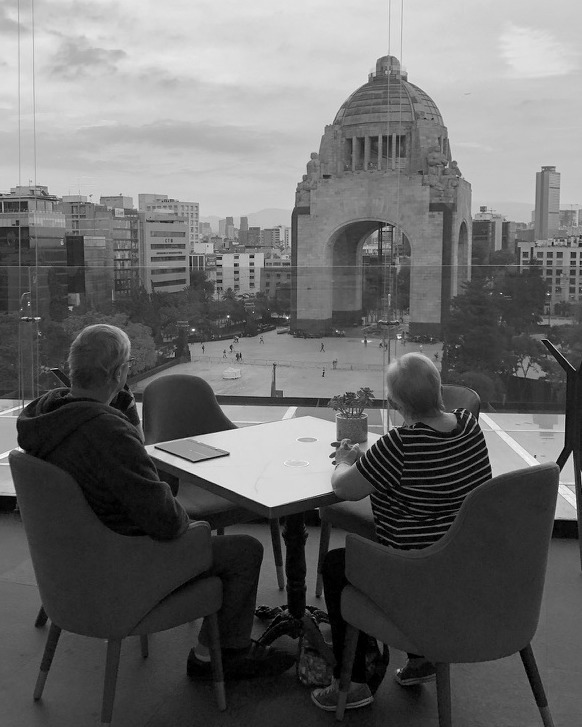
During a visit to Mexico in 2019, my parents were staying with me and my dad and I ended up talking late into the night. I asked what he was most proud of in his life. His answer was characteristically simple, after family: “I put roofs over a lot of heads.” Then he asked me what I was most proud of.

I thought about the projects I would once have listed without hesitation: complicated international assignments, demanding clients, the Gulfstream transaction and all the improbable problems that came with it. They had required judgement and hard work, and I remained proud of them. But next to my dad’s answer, complex problems like co-ordinating the fix of a leaky toilet on a private jet suddenly felt a lot less consequential.

That conversation did not make me reject the career I had built. It changed the question I was asking of it. How could I take two decades of experience solving problems and helping organisations deliver, and apply it in a way that helped real people? I did not have an answer yet.

Within months, the world would face the COVID-19 pandemic.

With the pandemic came purpose

As the pandemic took hold across the world, the question stopped being theoretical.

I was already travelling regularly to New York City and found myself there for extended periods as the pandemic unfolded. Through a friend, I heard about the extraordinary work City Harvest was doing as food insecurity surged across the city. As soon as volunteers were able to return, I signed up. My first Mobile Market shift was in July 2020.

For the next 15 months, I volunteered regularly on the frontline, supporting Mobile Markets across the city and taking part in Greenmarket rescues, collecting surplus produce that could be redirected to New Yorkers who needed it. I was not there as an adviser or an executive. I was carrying boxes, setting up distributions, handing out food and learning.

The scale of the organisation’s response was astounding. Before the pandemic, City Harvest distributed approximately 63 million pounds of food annually. At the height of the response, that grew to more than 150 million pounds. The organisation stepped up to meet an extraordinary increase in need while continuing to serve a network of more than 400 food pantries, soup kitchens and community partners.

What struck me was that City Harvest was also an extraordinary logistics operation. Food had to be sourced, collected, sorted, stored and moved back onto the road quickly. Trucks were travelling across all five boroughs every day of the year, while Mobile Markets and community partners extended the organisation’s reach deep into neighbourhoods throughout the city.

I was exceptionally proud simply to be one of the volunteers supporting that effort. It showed me what a mission looks like when thousands of operational decisions, relationships and individual acts of effort all work in the same direction. The scale was enormous, but the outcome was very simple: people got food.

When action has impact

The more time I spent on the frontline, the more I wanted to know whether I could be useful somewhere else in the organisation too.

Volunteering changed my understanding of food insecurity. I met participants from every walk of life and began to see more clearly how food, housing, health, employment and family circumstances intersect. No matter how hot the summer shift or how cold the winter morning, I went home knowing that somewhere in New York, people were eating because an extraordinary organisation and thousands of people around it had shown up.

I decided to write to the CEO. I explained that I was volunteering at as many distributions as I could, shared a little of my professional background and asked whether there were projects where my experience might be useful. HR followed up, and I began providing additional capacity on Special Projects, supporting work that needed research, coordination or someone to get it moving.

One of the first opportunities was vaccination access. I researched who to contact at NYC Health + Hospitals, reached out and explained what City Harvest was trying to achieve. That connection led to a mobile vaccination clinic at the warehouse, making vaccines easier to access for employees, drivers, volunteers and people in the surrounding community.

A few weeks later, I heard that NYC Health + Hospitals had received a large allocation of rapid COVID-19 tests during the Omicron surge. I called our contacts and explained City Harvest’s distribution capacity. Once they understood the reach of the network, the conversation quickly grew to roughly a dozen pallets - close to one million tests.

At that scale, the experts needed to take over. I connected the Senior Project Manager in the Chief Operating Officer’s team, who did what City Harvest’s operations team did so well: they operationalised it. Soon afterwards, those tests were moving through community partners and Mobile Markets across the city.

A few weeks later I was back volunteering, handing them out myself. That entire experience captured something I believe strongly: sometimes impact starts with noticing an opportunity, making the call and then getting the work into the hands of the people best equipped to deliver it.

Inside the Office of the CEO

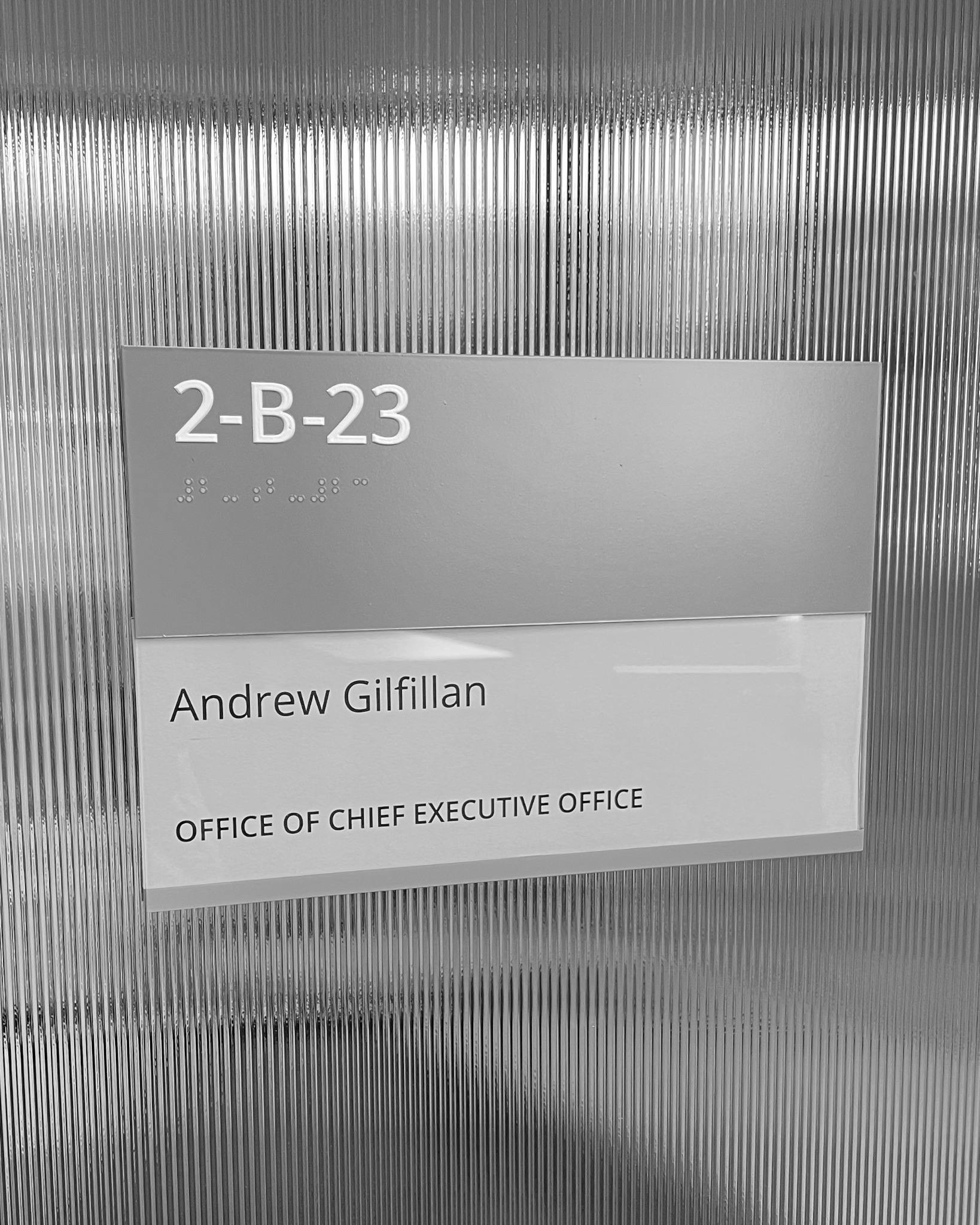
In April 2022, after a formal recruitment process, I joined City Harvest as Chief of Staff to the Chief Executive Officer.

I arrived at an important inflection point. The organisation had responded extraordinarily to COVID-19, but there was no simple switch back to business as usual. Community need remained high, the organisation had grown substantially and leadership needed to decide which capabilities developed during the emergency should endure and what City Harvest should become over the next five years.

My primary responsibility was supporting the CEO in delivering the organisation’s strategic priorities, including leading the development of the next five-year strategic plan. I developed the RFP, shared it with specialist firms across the country, helped narrow the field and supported the Board Strategic Planning Committee through selection and delivery. The process ultimately drew on input from more than 200 stakeholders.

The role extended well beyond the plan. I supported the move to the new Sunset Park campus, helped coordinate the return to work after an extended period of remote operations and stepped into high-priority issues that crossed departmental boundaries or did not sit neatly on the organisation chart. I also supported special work connected to a developing partnership with God’s Love We Deliver and the sale of the Plentiful technology platform.

Chief of Staff work requires you to understand the whole organisation rather than the piece immediately in front of you. You have to know when to lead something, when to connect people, when to ask a difficult question and when to get out of the way. Much of the value comes from seeing across functions and helping the CEO’s priorities become organisational priorities.

I also had the privilege of working closely with an exceptional nonprofit CEO and seeing what effective mission-driven leadership looks like at scale: clarity about purpose, enormous ambition for the people being served and the discipline required to keep a complex organisation moving. It reinforced something that now sits at the heart of my work: strategy matters, but only when an organisation has the capacity to turn it into reality.

That’s our origin

All of those experiences eventually came together in the idea behind HATCH.

We are not a consulting firm. We provide flexible additional capacity when organisations need experienced support to solve problems, bring clarity to complex situations and move important work forward. Sometimes that is a defined project; sometimes it is a leadership priority that needs someone to pick it up; sometimes it is simply extra capacity at a moment when everything feels important at once.

The private sector taught me how to operate in complex environments, adapt quickly and stay focused on delivery. My family taught me that organisations and public systems ultimately matter because of what they do for individual people. City Harvest brought those two things together and showed me how powerful good operations can be when they are directly connected to a mission.

That is also why I do not want to recreate a large consulting model. I want the work to remain practical, flexible and proportionate to what an organisation actually needs. Wherever possible, that means clear scopes, straightforward pricing and experienced people spending their time on the work rather than building layers around it.

Over time, I hope to build a community of operators who feel the same way: people with useful experience who want to apply it to organisations doing meaningful work. People who are curious enough to understand before acting, confident enough to challenge something when it is not working and practical enough to help fix it.

I think differently about my dad’s question now. I am still proud of the career that came before this, and I would not have the skills I use today without it. But I know what I want the next twenty years to be about: using what I have learned to help organisations deliver more for the people they serve.